


Color plays a pivotal role in setting the tone of your home, influencing mood, style, and harmony in every room. Yet, with endless options for flooring, paint, and furnishings, even the savviest interior designer can feel overwhelmed. Enter the 60-30-10 rule—a simple, timeless design principle that makes choosing the perfect color palette and coordinating color schemes stress-free.
Whether designing a serene living room, a stylish dining room, or a cozy bedroom, the 60-30-10 rule works with any style and budget. It effortlessly transforms spaces, from classic natural wood floors to bold modern accents, ensuring your home is functional and visually stunning.
At Rosendale Flooring Co., we specialize in helping homeowners bring their design visions to life. With our Flooring Design Services, we’ll guide you through every step of the process, from selecting the perfect flooring material to coordinating colors that complement your unique style. Whether you’re drawn to the timeless elegance of hardwood, the versatility of luxury vinyl, or the comfort of carpet, our experts are here to make the process easy and enjoyable.
Why Choose RFC Flooring Design Services?
- Personalized Consultations: Our team will help you create a balanced, harmonious design tailored to your home’s aesthetic using the 60-30-10 rule.
- Extensive Selection: Explore a wide range of high-quality flooring options, from hardwood to tile, all designed to elevate your space.
- Professional Expertise: With years of experience, our designers provide practical advice and creative solutions to ensure your space looks polished and inviting.
Transforming your home starts with the proper flooring foundation. Contact Rosendale Flooring Co. today to schedule your consultation, and let us help you design a space you’ll love for years to come!
What is the 60-30-10 Rule?
The 60-30-10 rule is a tried-and-true guideline in interior design. It offers a straightforward approach to creating visually appealing and harmonious spaces. Think of it as a formula that helps balance colorful elements, textures, and tones in a way that feels natural and pleasing to the eye. This method takes the guesswork out of combining colors and is often compared to a color wheel's ability to guide you toward the proper proportions.
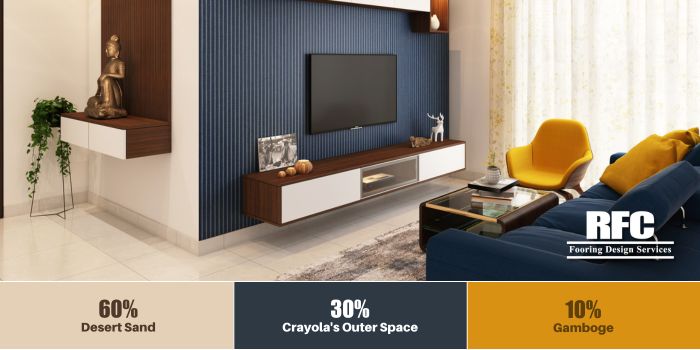
At its core, the 60-30-10 rule divides a room’s color scheme into three components:
- 60% Dominant Color: The room's foundation, covering the largest visual area.
- 30% Secondary Color: A complementary hue that adds depth and contrast.
- 10% Accent Color: The finishing touch that introduces personality and pops of visual interest.
This is where your personality truly shines. The accent color is used sparingly but purposefully to add vibrancy and charm. Think throw pillows, vases, artwork, or even a bold piece of furniture.
The Origins of the 60-30-10 Rule
The 60-30-10 rule stems from traditional design principles used for centuries across various art forms, including interior design, fashion, and graphic design. While its origin is unclear, this color theory has long been a trusted guideline for creating balanced and harmonious color schemes.
Over time, the 60-30-10 rule has been adapted for other creative fields:
- Film and Cinematography: Used to craft visually cohesive scenes and establish mood through color.
- User Interface (UI) Design: Applied in digital design to create balanced and aesthetically pleasing interfaces.
- Architecture: Adopted in building design to create harmonious color palettes in structural spaces.
Despite its long history, the 60-30-10 rule continues to evolve, adapting to new mediums and design challenges. Its enduring relevance is a testament to its effectiveness in visually stunning and balanced designs.
Why the 60-30-10 Rule Works
The 60-30-10 rule is a design powerhouse because it simplifies the often-overwhelming task of choosing and combining colors, ensuring your space feels balanced, harmonious, and intentional. By clearly defining proportions, this rule prevents two common design mistakes: overloading a room with too many colors or creating a flat, uninspired space. Whether working with a neutral base or bold hues, this rule provides a roadmap to creating visually cohesive rooms that suit your style and needs.
Applying the 60-30-10 Rule to Flooring
Flooring often serves as the foundation of a room's design, becoming the dominant color and making up 60% of the overall color scheme. The material and tone you choose set the stage for the rest of the design and impact the space's mood, functionality, and style. By thoughtfully applying the 60-30-10 rule to your flooring choice, you can achieve a harmonious look that seamlessly combines your room's elements.
Different flooring types offer unique opportunities to enhance your design, from hardwood's warmth to luxury vinyl's versatility. Here’s how to make each option work within the 60-30-10 framework:
Carpet: Soft and Cozy Foundation
Carpet creates a warm, inviting atmosphere, particularly in bedrooms or living rooms. Available in a wide range of colors and textures, carpet can act as a neutral base or introduce a subtle pattern that complements the rest of your color scheme.
Hardwood Flooring: A Timeless Choice
Natural wood flooring, from light birch to deep mahogany, offers endless possibilities for experimenting with color palettes. Its timeless appeal makes it a versatile choice for any style.
Tile: Durable and Versatile
Tile is a practical and stylish option, especially in kitchens and bathrooms. Its durability and water resistance make it ideal for high-traffic areas, while its variety of styles allows for creativity.
Luxury Vinyl: Stylish and Practical
Luxury vinyl has become increasingly popular due to its ability to mimic the look of natural materials like wood or stone. It’s budget-friendly, durable, and available in countless styles.
Laminate: Affordable and Stylish
Laminate flooring is another cost-effective option that mimics the look of hardwood or tile. Its durability and easy maintenance make it an excellent choice for busy households.
The 60-30-10 rule can anchor your design by choosing the right flooring material and tone. Whether you prefer the softness of carpet, the timeless elegance of hardwood floor colors, or the practicality of luxury vinyl and laminate, your flooring will set the stage for a beautifully balanced and cohesive room.
Real-Life 60-30-10 Rule Examples: Using Flooring to Anchor Your Design
Here are some ideas for integrating the 60-30-10 rule into your home:
- Living Room: Use natural wood floors (60%) as the base, complement them with a navy blue area rug and furniture (30%), and finish with gold accents (10%) for a touch of glamour.
- Dining Rooms: For a warm, inviting space, opt for rich walnut flooring (60%), sage green dining chairs (30%), and burgundy napkins or centerpiece flowers (10%).
Take the Guesswork Out of Design
If you’re ready to create a stylish, balanced, and uniquely your home, the 60-30-10 rule is your go-to design strategy. Whether you’re drawn to hardwood flooring, patterned tiles, or versatile vinyl, this rule makes it easy to create spaces that feel polished and intentional.
Need help deciding? Take our online quiz to discover your ideal color palette, and mention this blog for a special discount on a design consultation. Let’s make your dream space a reality—one beautifully balanced room at a time!


